
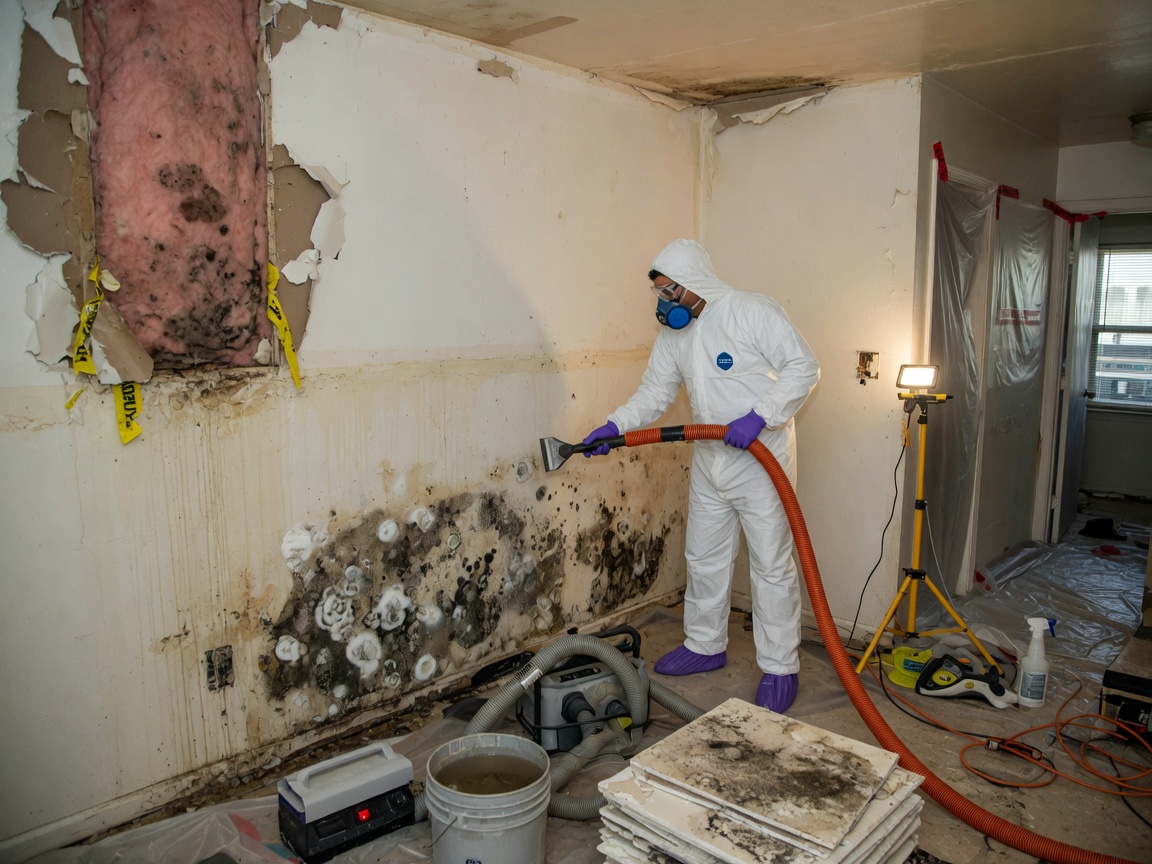
Midland's humid continental climate brings cold winters that freeze pipes in older homes built before 1970 in neighborhoods like Plymouth Park and Eastlawn. When those pipes burst, water migrates behind drywall and under subfloors, creating conditions for black mold within 48 hours. Technicians must remove saturated cellulose insulation and treat joists with antimicrobial solutions before any reconstruction begins.
Dow Gardens and the Tridge area sit near the Tittabawassee River, where spring flooding and poor drainage around slab foundations push moisture into crawl spaces. Homeowners in these zones often discover musty odors months after the initial leak because the cold ground slows evaporation. Proper remediation requires negative-air machines and HEPA filtration to keep spores from drifting into living areas during demolition.
Nearby cities such as Bay City and Saginaw share similar housing stock and weather patterns, so crews frequently travel between counties for jobs involving HVAC systems that recirculate spores after a roof leak. Midland Center for the Arts buildings and surrounding commercial properties add another layer: their older ductwork and flat roofs demand targeted cleaning of metal surfaces rather than simple bleach wipes that leave roots behind.
Chippewa Nature Center trails highlight how local soil retains moisture year-round, affecting basements in low-lying sections of Downtown Midland. Edge cases include hidden mold in particleboard cabinets or under vinyl flooring where water pooled unnoticed. Every job includes moisture mapping with infrared cameras and post-remediation air sampling to confirm spore counts return to normal outdoor levels before homeowners reoccupy the space.
Technician insight
In Midland the thing that catches most people out with Mold Remediation After Water Damage is older plaster walls in Plymouth Park homes that hide moisture for weeks after a winter pipe burst because the cold ground keeps everything damp longer than newer drywall would.
Hidden Growth After Frozen Pipe
A homeowner in Eastlawn noticed a musty smell weeks after a January freeze. We found extensive mold behind kitchen drywall and under the subfloor from a burst supply line. Containment and targeted removal prevented spread into the living areas, and clearance testing allowed the family to return without further issues.
Mold Remediation After Water Damage Services We Offer
✓Basement Mold Remediation
Removes mold colonies from concrete walls and joists after sump pump failures or river flooding common near the Tridge.
✓Crawl Space Mold Treatment
Treats ground moisture and insulation contamination in older Eastlawn homes where cold winters trap humidity under floors.
✓Attic Mold Removal After Roof Leaks
Targets mold on rafters and insulation following ice dam damage during Midland's harsh winter months.
✓HVAC Mold Cleaning
Cleans ducts and coils that spread spores after water intrusion in Plymouth Park residences and local commercial buildings.
✓Drywall and Insulation Replacement
Removes and replaces water-damaged materials while containing spores to prevent cross-contamination in Downtown Midland properties.
Mold Remediation After Water Damage Cost in Midland, MI
| Service | Typical Range | What Affects It |
|---|---|---|
| Small room remediation (under 100 sq ft) | $800–$1,800 | Price rises if subfloor or multiple walls are involved. |
| Crawl space treatment | $1,200–$2,500 | Higher when insulation must be fully replaced. |
| HVAC system cleaning | $600–$1,400 | Depends on number of ducts and spore load. |
| Full basement remediation | $2,000–$4,500 | Varies with square footage and river-adjacent moisture levels. |
Ranges are typical for Midland, MI and confirmed with an exact written quote before any work starts.
How it works
- 1
Emergency Assessment
Technicians arrive within hours, map moisture with infrared tools, and identify the water source in the specific Midland neighborhood.
- 2
Containment Setup
Plastic barriers and negative air machines isolate the affected zone to stop spores from reaching unaffected rooms.
- 3
Removal And Cleaning
Saturated materials are removed, surfaces treated, and hidden cavities behind cabinets or in HVAC systems addressed.
- 4
Drying And Verification
Industrial dehumidifiers run until readings drop below 15 percent, followed by air sampling to confirm clearance.
Pricing
Pricing varies by affected square footage, depth of hidden growth, and whether HVAC systems require cleaning.