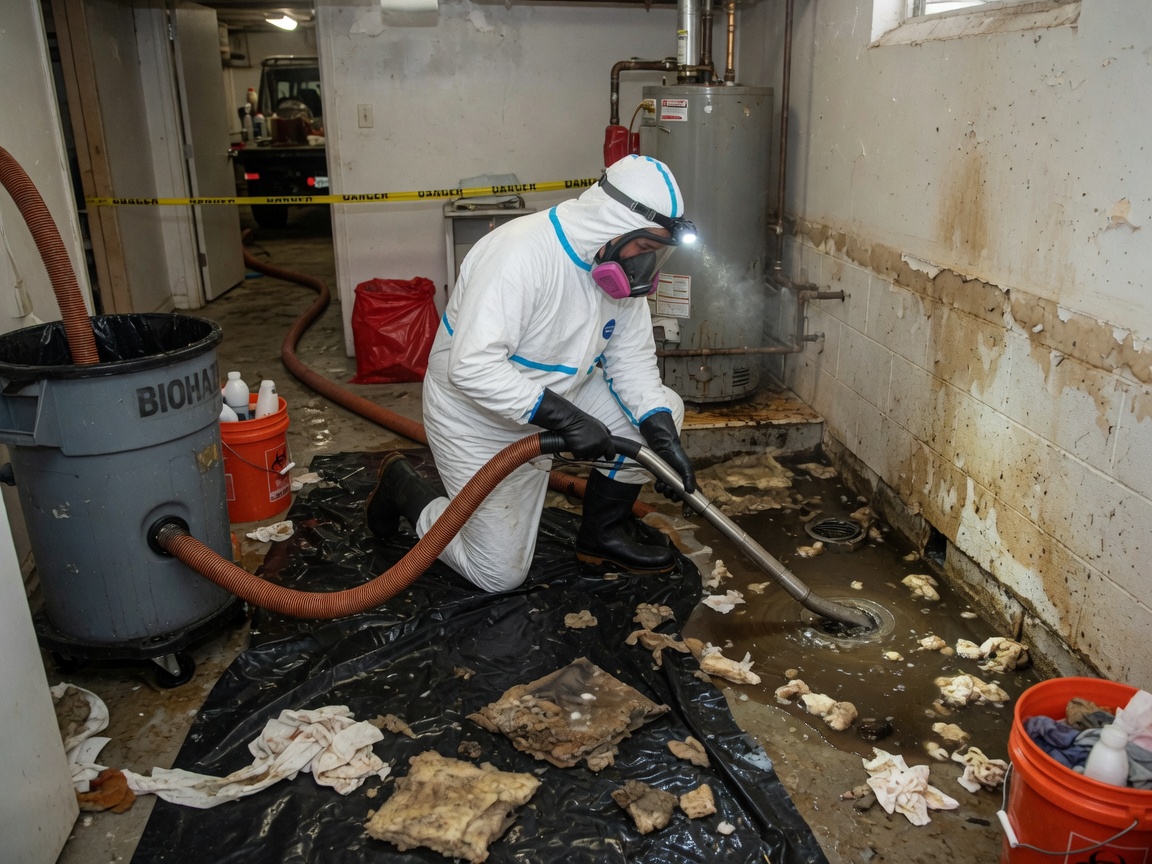
Sewage backups in Midland often trace to older cast-iron lines in homes built before 1970, especially in Plymouth Park and Eastlawn where tree roots and shifting clay soils crack pipes. Cold winters bring freeze-thaw cycles that heave foundations and separate joints, letting groundwater and waste enter basements. Technicians extract standing water, remove saturated drywall and insulation, then apply EPA-registered disinfectants followed by moisture mapping to prevent hidden mold growth that can appear weeks later in humid continental summers.
Work near the Tridge or Dow Gardens requires extra containment because river-adjacent properties sit on high water tables; one missed pocket of contaminated soil can re-contaminate an entire crawl space. Crews use air scrubbers and negative air machines sized for Midland’s typical ranch and two-story stock, then document every step for insurance adjusters who know local codes require full removal of porous materials once Category 3 water is confirmed.
Homeowners in Downtown Midland sometimes discover backups only after sewage reaches finished lower levels used for storage or offices. In these cases we cut and dispose of affected carpet, subfloor sections, and cabinet bases rather than attempting surface cleaning that leaves odor and bacteria behind. Final clearance includes ATP swab testing and dehumidification calibrated to Midland’s warm, humid summers so the structure dries below 50 percent relative humidity before reconstruction begins.
Technician insight
In Midland the thing that catches most people out with sewage backup cleanup is older clay sewer lines under Eastlawn and Plymouth Park homes that crack during spring thaws; once waste reaches the gravel bed it travels under the slab and you end up chasing contamination farther than the visible water line suggests.
Plymouth Park Basement Backup
A homeowner in Plymouth Park noticed waste water rising after a late-winter thaw. We traced the break to a cracked clay line, extracted several hundred gallons, removed eight feet of saturated drywall, and dried the space over four days. Final testing confirmed safe levels before the owner rebuilt.
Sewage Backup Cleanup Services We Offer
✓Residential Sewage Extraction
Removes contaminated water and solids from basements and crawl spaces in Midland homes, followed by disinfection and drying to stop bacterial growth.
✓Commercial Backup Restoration
Restores retail and office spaces in Downtown Midland after sewage events, coordinating with landlords and insurers while keeping adjacent businesses operational.
✓Contaminated Material Removal
Cuts out and disposes of saturated drywall, carpet, insulation and subfloor sections that cannot be salvaged after Category 3 water intrusion.
✓Post-Flood Disinfection
Applies hospital-grade antimicrobials and performs ATP testing to verify surfaces meet safe standards before reconstruction in Midland properties.
✓Crawl Space Sewage Cleanup
Addresses backups that pool under homes in Eastlawn and Plymouth Park, removing waste and installing vapor barriers to block future moisture entry.
Sewage Backup Cleanup Cost in Midland, MI
| Service | Typical Range | What Affects It |
|---|---|---|
| Residential sewage extraction and disinfection | $800–$2,200 | Varies with basement size and depth of contamination |
| Crawl space sewage cleanup | $1,100–$2,800 | Higher when vapor barrier or insulation replacement is required |
| Commercial backup restoration | $1,500–$4,500 | Depends on square footage and business interruption needs |
| Contaminated material disposal | $400–$1,200 | Based on weight and local landfill fees |
Ranges are typical for Midland, MI and confirmed with an exact written quote before any work starts.
How it works
- 1
Emergency Assessment
Technician arrives within hours, identifies the source, tests water category, and maps affected zones in the Midland property.
- 2
Water Extraction
Powerful pumps and vacuums remove standing sewage while containing runoff to protect unaffected areas and nearby lots.
- 3
Contaminated Material Removal
Porous materials are cut out and hauled away; remaining surfaces receive initial antimicrobial treatment.
- 4
Drying and Clearance
Industrial drying equipment runs until moisture readings drop, followed by final disinfection and testing before rebuild.
Pricing
Upfront quotes provided after on-site inspection; final cost depends on volume, access, and materials removed.